
Tender Guidelines
Five short guides to help you prepare, submit and follow up
| Important Tender rules, thresholds and portals change. Always follow the requirements in each tender document, and check current National Treasury and municipal guidance. These guides are not legal or procurement advice. |

Guide 1: How to Read a Tender Document
Read the whole document before you decide to bid. Most tenders follow the same pattern:
- Invitation to bid: tender number, closing date and time, where to submit, who to contact
- Special conditions and scope of work: exactly what the client wants, quantities, locations, timeframes
- Evaluation criteria: how your bid is scored (price, preference points, functionality)
- Compulsory requirements: documents, forms, briefings and certifications. Missing one can disqualify you
- Pricing schedule: where you enter your prices
- Standard forms and contract terms: declarations, and the contract you would sign if you win
Do this first
- Highlight every “must”, “shall”, “compulsory” and “failure to” in the document
- Note the closing date, time and the exact submission address
- Check whether there is a compulsory briefing or site meeting, and on what date
- Check the evaluation method, including any minimum functionality score before price is considered
- Check the validity period (how long your price must stay open)
- Write down every question and send it before the query deadline
Decide whether to bid
Can you meet the requirements, deliver on time and still make a profit? A rushed bid you cannot win or deliver costs time and reputation.
Guide 2: Common Reasons Tenders Are Disqualified
- Submitted late (even by a few minutes)
- Delivered to the wrong place, or the envelope was not sealed or marked correctly
- Compulsory briefing or site meeting missed
- Compulsory forms not completed, signed or dated
- Expired or missing documents (tax compliance status, B-BBEE certificate, COIDA letter)
- Supplier not registered on the Central Supplier Database (CSD), where required
- Prices missing, or the pricing schedule was changed or altered
- Documents altered with correction fluid, or corrections not initialled
- Missing certified copies or original signatures
- Not enough evidence of experience or references
- Prices not valid for the required period
- Failing the minimum functionality score
- Supplying false information
| Before you submit, check three things Every compulsory item, every signature, and every expiry date. |
Guide 3: Submission-Day Checklist
The day before
☐ Final read-through against the tender document
☐ All forms signed and dated by an authorised person
☐ Pricing checked (maths, VAT, no blank lines)
☐ Copies made (original plus the number of copies required)
☐ Documents in the order the tender asks for, with an index
☐ Envelope labelled: tender number, description, closing date, company name
☐ Check the address and whether the tender box is open to the public
On the day
☐ Leave early, allowing for traffic and security checks
☐ Take ID, a pen and spare copies
☐ Get a receipt or date-stamped proof of delivery
☐ Note the time you delivered
☐ Photograph the tender box and receipt, if allowed
For electronic submissions, submit well before the deadline, check the file sizes, and keep the confirmation email.
Guide 4: Following Up After Submission
- Diarise the expected evaluation and award dates in the tender document
- Do not contact evaluators about your bid while it is under evaluation, as that can disqualify you
- Ask for outcomes in writing, through the contact person named in the tender
- If you lose, request a debrief and your score, where the process allows it
- Track why you lost (price, functionality, documents, preference points) and improve the next bid
- If you have serious concerns about the process, follow the appeal or objection procedure in the tender document, and keep to its deadlines
Guide 5: Where to Find Tenders
Government
- eTender Publication Portal (etenders.gov.za): National Treasury’s tender portal
- Municipal and provincial government websites (procurement or “tenders” pages)
- State-owned entities such as Eskom, Transnet, SANRAL and Telkom, which publish their own opportunities
- Newspapers and the Government Tender Bulletin
Private sector
- Mines, manufacturers and large companies often run supplier registration and quote requests. Register on their supplier databases.
- Contact procurement departments directly and introduce your company.
Register first
The Central Supplier Database (csd.gov.za) is needed for most government work.
Tips
- Set up email alerts and save searches by category and region
- Start with small local tenders to build a track record
- Keep your compliance documents ready so you can bid quickly
We are here to help
With over five years at a leading engineering company that supplies the mining industry, I put together and submitted more than 50 tenders, with around 20 awarded. I managed each submission from start to finish: reviewing the requirements, compiling compliance and company documents, completing forms and pricing schedules, writing cover letters and supporting documents, and delivering everything correctly ordered and on time.
Because I come from a graphic design and print background, every submission was also professionally presented, with clean layouts, consistent branding and clear indexing. These templates are built from what I learned doing this in practice, so you get the structure that works, not just generic forms.
Examples of submissions and award letters are available on request, due to client confidentiality.
Tender Guides available for Download
-

01-The Tender Toolkit – Bundle
R965,00 -

02-Tender Readiness Checklist
R85,00 -

03-Tender Submission Documents Guide
R250,00 -

04-Tender Health & Safety Pack Guide
R350,00 -

05-Tender Methodology & Delivery Plan Guide
R350,00 -

06-Tender Reference Letter Pack Guide
R200,00 -

07-Gantt Chart Template
R50,00 -
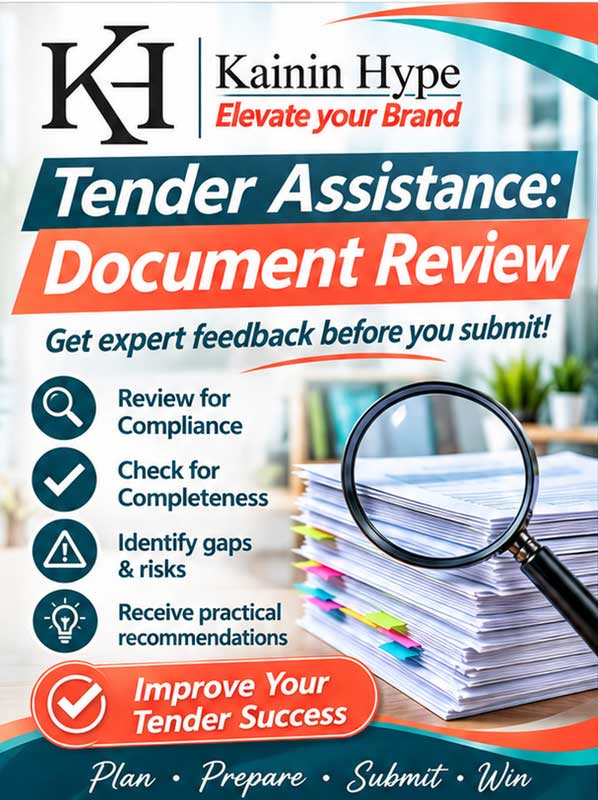
08-Tender Assistance: Document Review
R2500,00 -
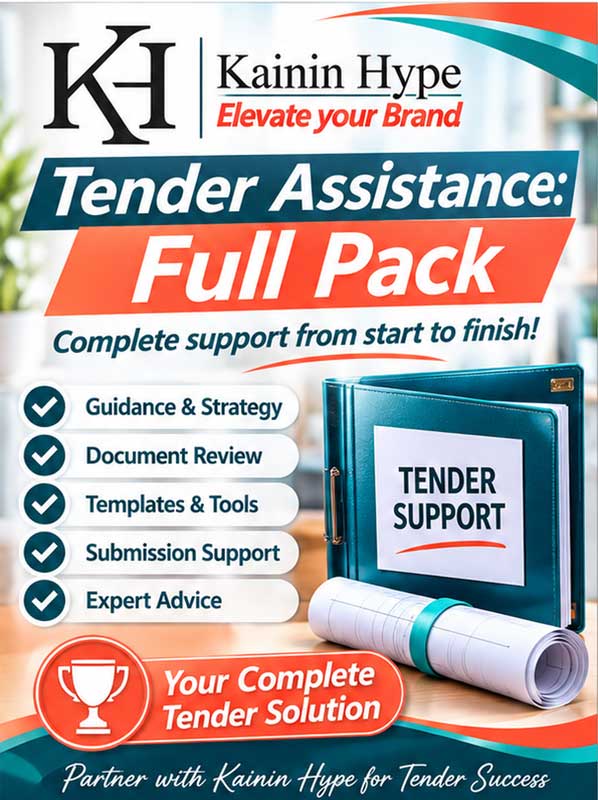
09-Tender Assistance: Full Pack
R5250,00